By Pryce Sprague
IN SUMMARY
If you manage a building in Victoria – whether it's a commercial property, a strata complex or a large facility – emergency lighting and exit signs are two of the most critical fire safety systems you're responsible for. And in my experience, they're also two of the most quietly misunderstood.
In this article, I'll walk you through what Australian regulations for emergency lighting and exit signs actually require, what the 90-minute test involves, why failures are more common than most people expect and what a well-maintained emergency lighting and exit signage program should look like.
What you’ll learn in this article:
I want to be upfront: emergency lighting and exit signs aren’t the most glamorous part of any building.
You won't get compliments on them during a routine inspection. Nobody is walking through your facility saying, “great emergency lighting in here!”
But here's the thing:
Emergency lighting and exit signs are the silent, quiet compliance risk in Australian buildings.
The systems often look perfectly fine on a normal day, under normal lighting conditions, in a building that's never had an incident. And that's precisely the problem!
At Fire & Wire, I think about this every single day.
Because as a Victorian Essential Service Maintenance (ESM) provider, I've seen what happens when these emergency lighting and exit sign systems aren't properly maintained. And I've sat with facility managers, property managers and strata managers who didn't realise there was a problem – until there was.
What are Australian Building Emergency Lighting and Exit Signs?
Before we get into the compliance requirements and testing obligations, it's worth being clear on what we're actually talking about.
Emergency Lighting
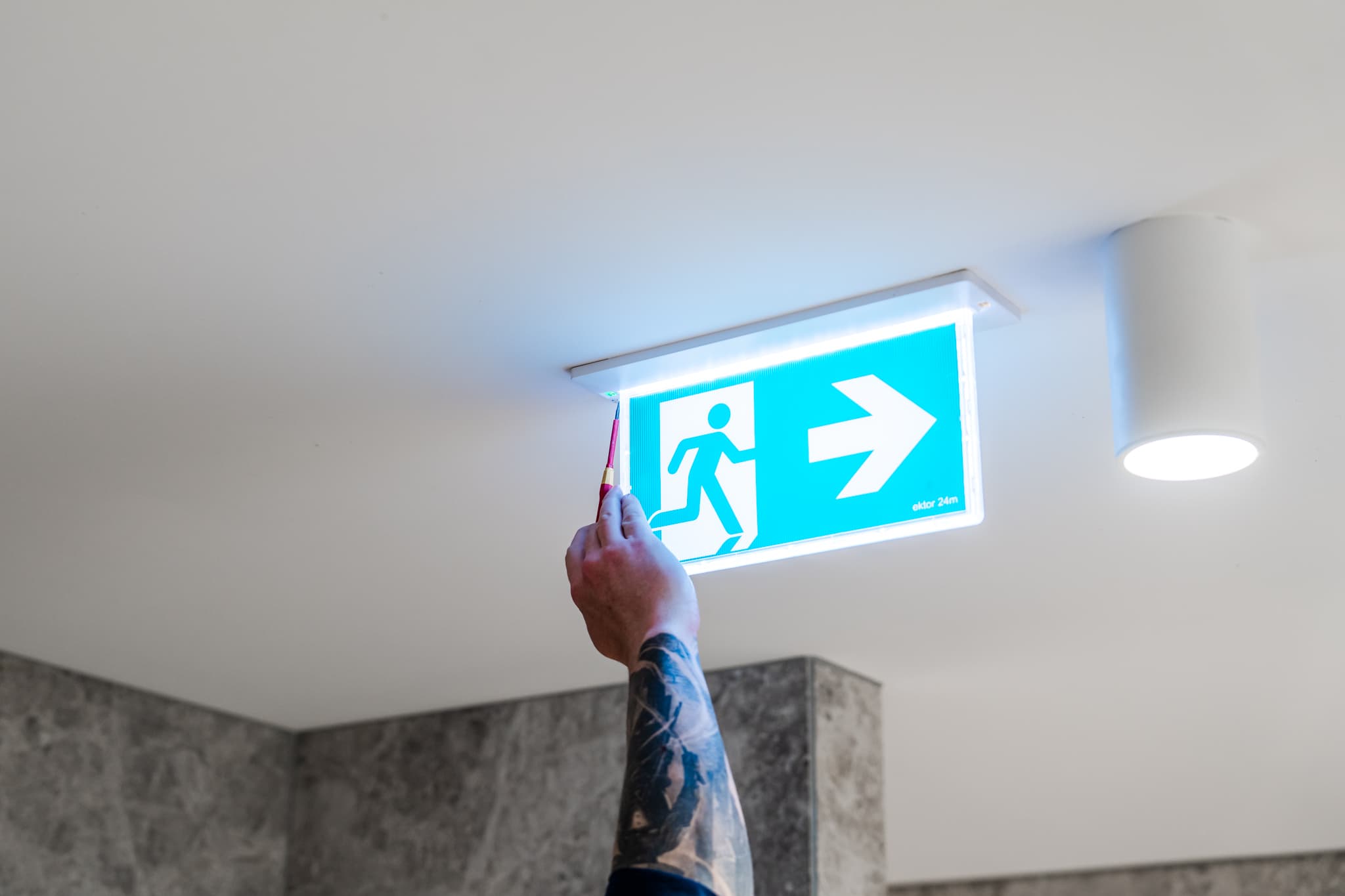
Emergency lighting refers to battery-backed lighting systems installed throughout a building that automatically activate when the main power supply fails.
Their job is simple but critical: to illuminate pathways, corridors, stairwells and exit routes so that building occupants can safely find their way out of a building during a power failure or fire event.
Under Australian Standards – specifically AS 2293.1 – building emergency lighting must provide sufficient illumination for safe evacuation. And critically, it must remain operational for a minimum of 90 minutes after a power failure.
Exit Signs and Exit Signage
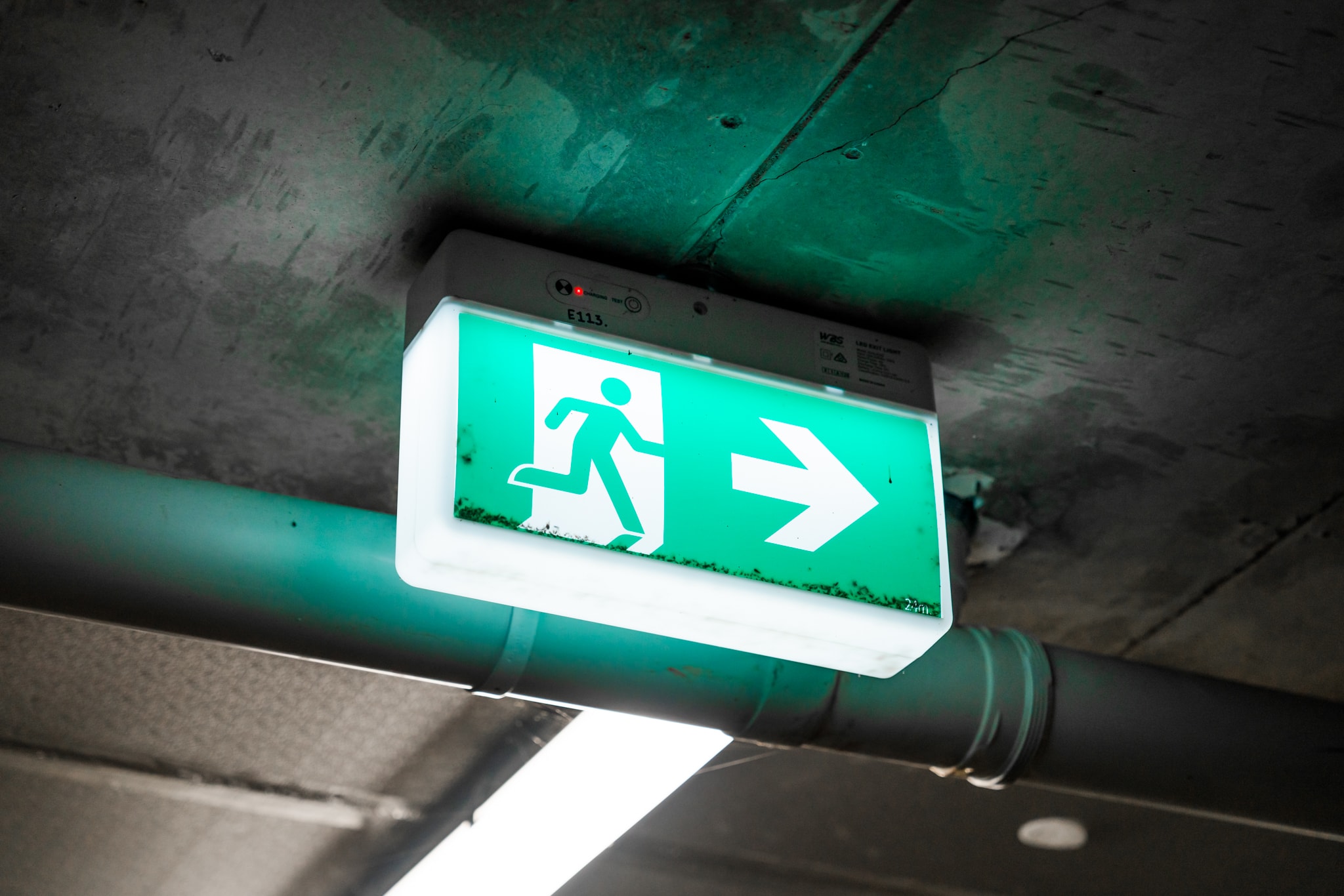
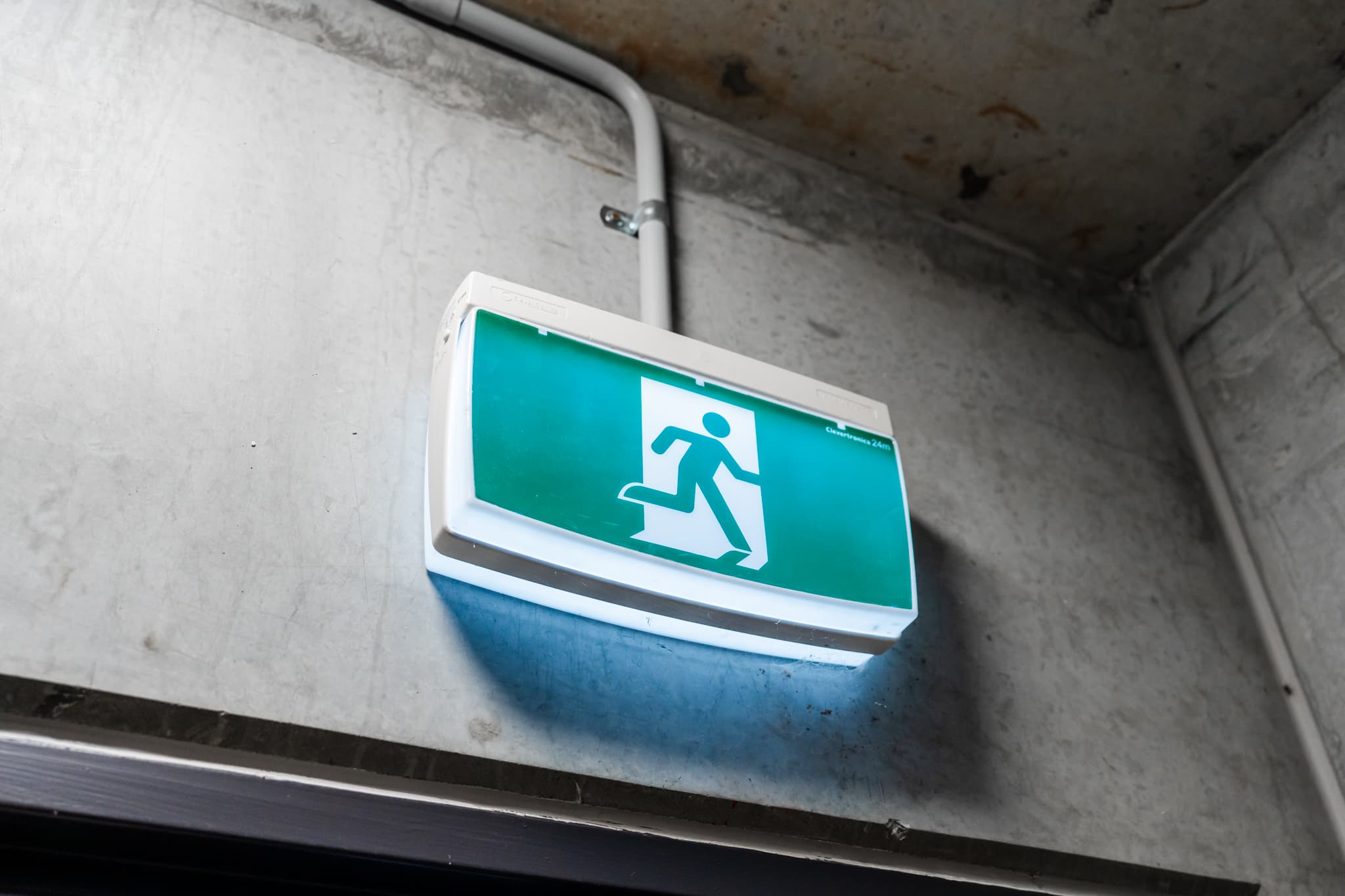
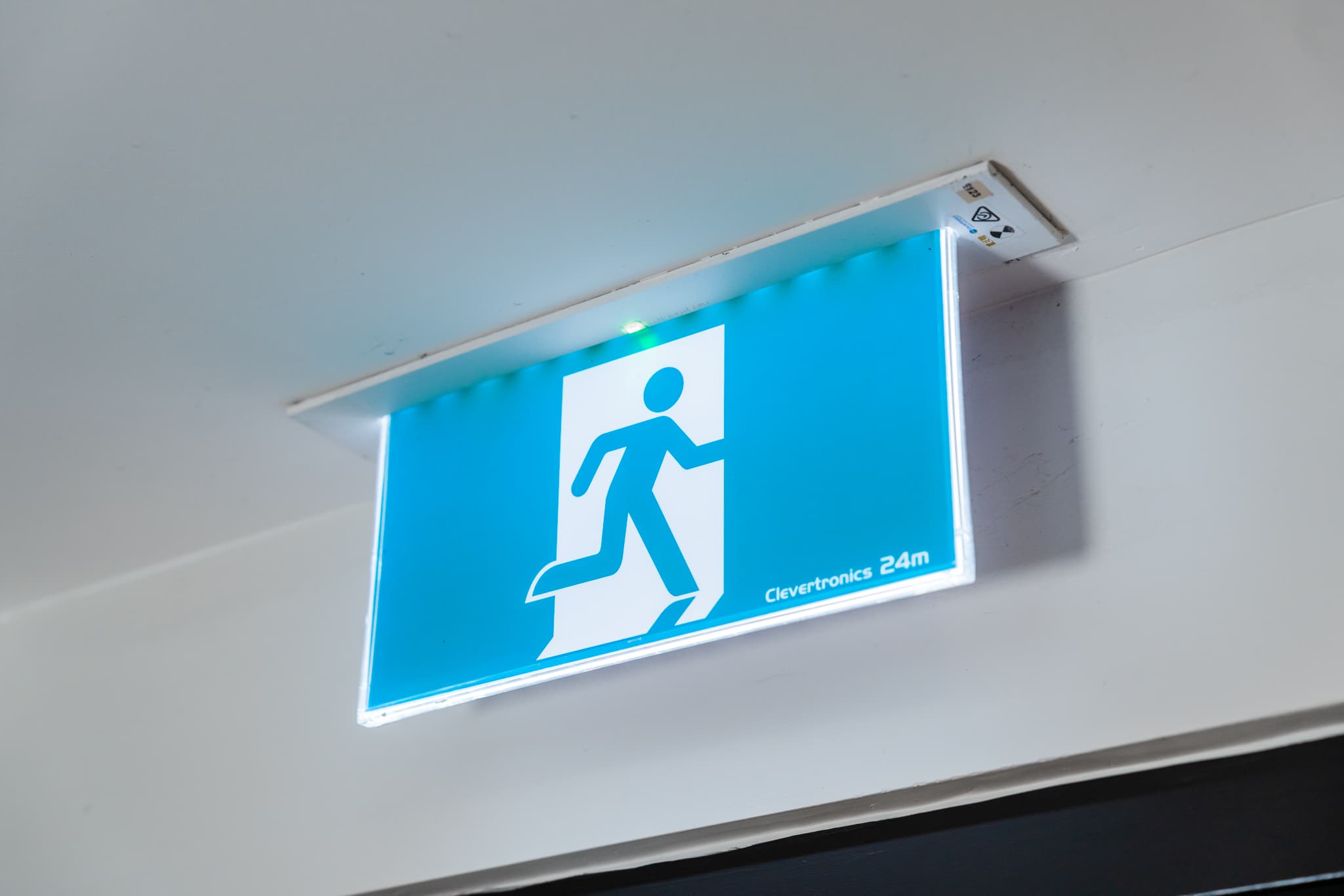
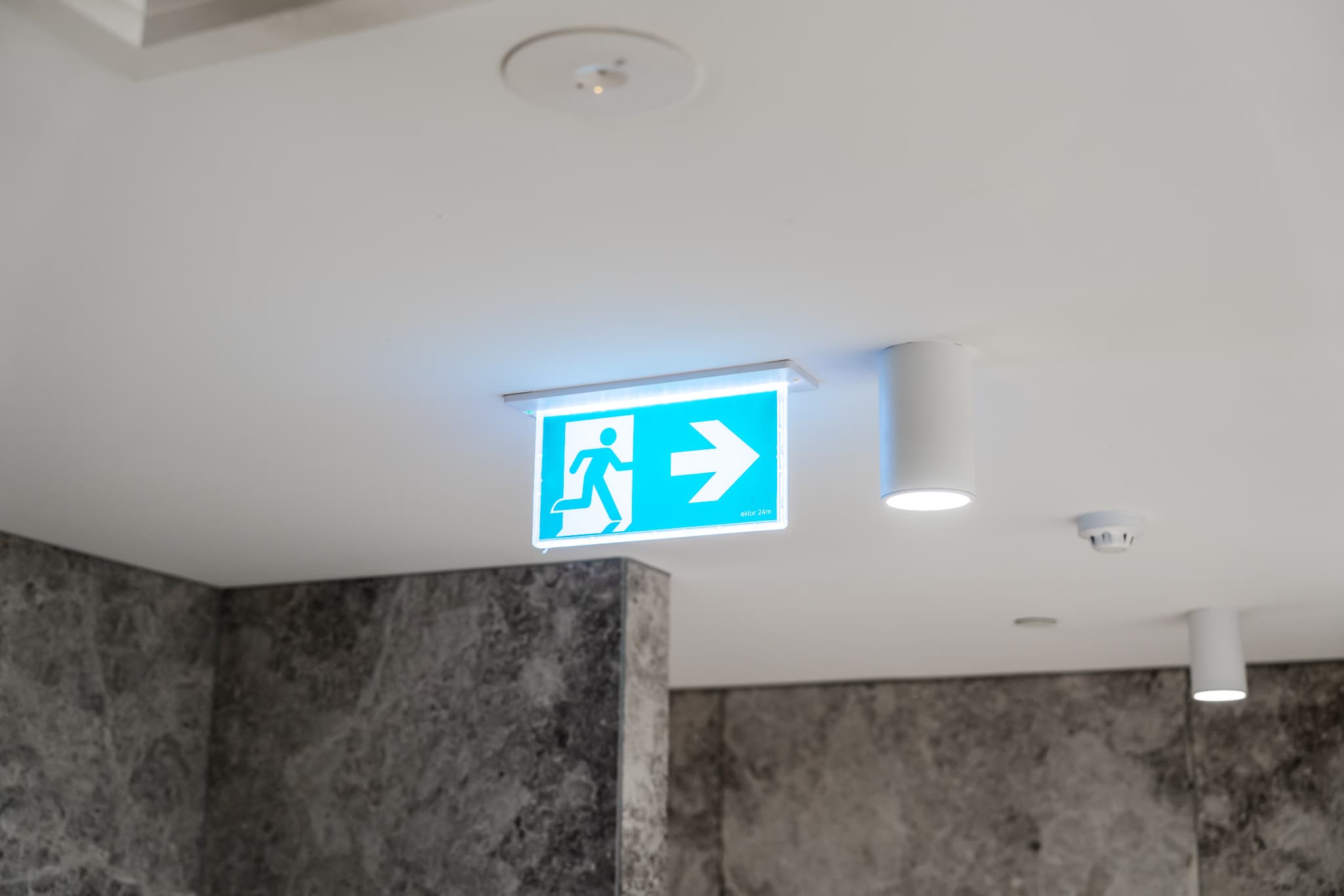
Exit signs and exit signage are the illuminated signs that identify emergency exits and the pathways leading to them. These are the green signs with the running figure that you see above doors and at corridor intersections throughout commercial buildings.
Like emergency lighting, exit signs must be continuously illuminated and must remain operational during a power failure.
Together, emergency and exit lighting are the most important fire safety systems for ensuring people can actually escape a building safely.
Why the 90-Minute Emergency Lighting matters more than Most People Realise
Emergency lighting isn’t about whether it turns on. It’s about whether it lasts when it matters.
The Australian building emergency lighting and exit sign standard:
Now, here's where things get interesting – and where I see a lot of buildings run into trouble.
A quick visual check might show that a fitting APPEARS to be working. The light comes on. It looks bright. You might tick a box. But that doesn't tell you whether the battery will last for 90 minutes.
What gets missed with emergency lighting and exit signs in buildings:
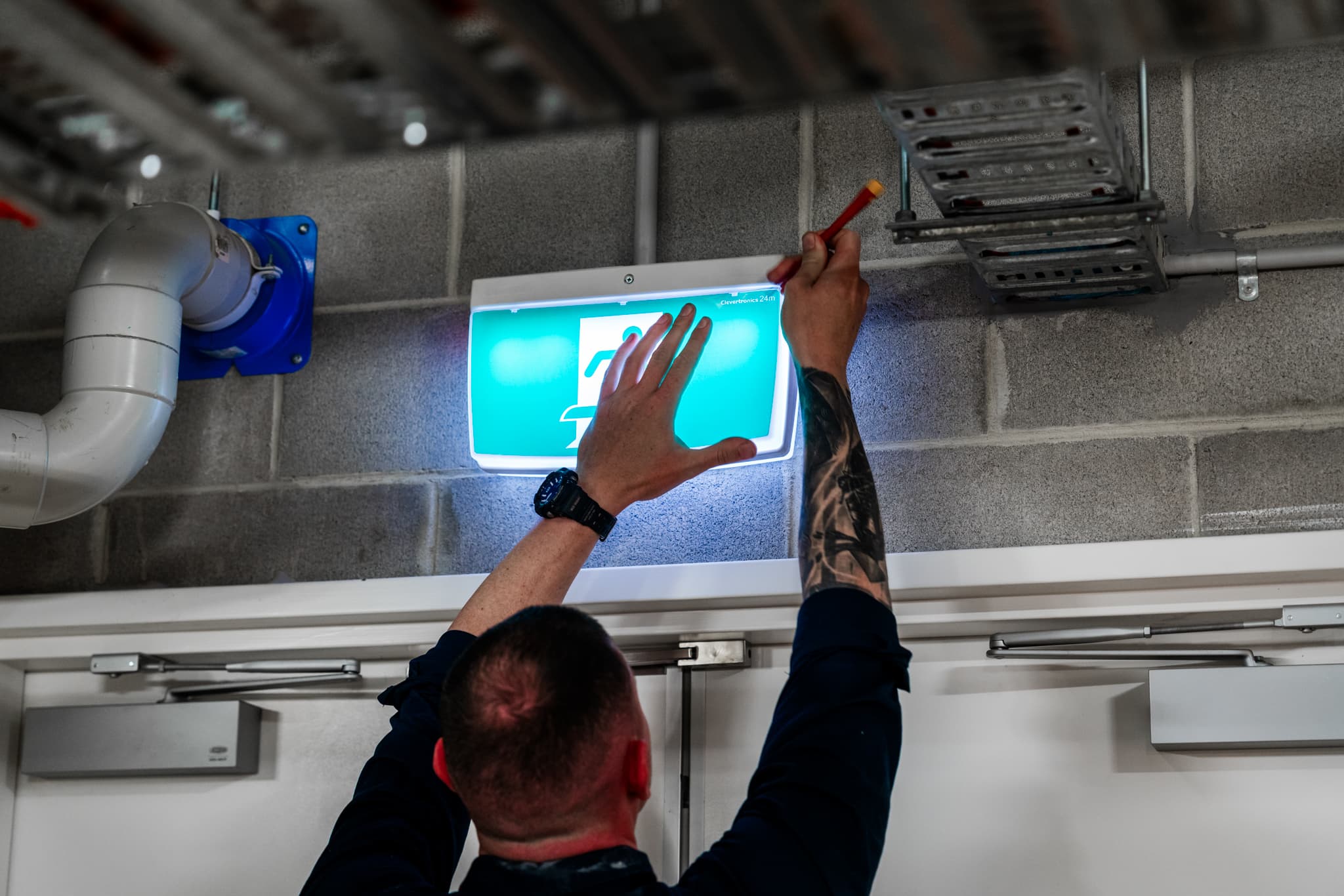
At Fire & Wire, our building ESM safety technicians stay on site for the full 90-minute test. Not 45 minutes. Not 60 minutes. The full 90. Because that's what the regulations require and that's what it takes to genuinely confirm compliance – not just on paper, but in practice.
When an emergency lighting fitting fails the 90-minute test, we don't just note it and move on.
We identify it, report it and arrange immediate repair or replacement.
That's what a structured, compliant emergency lighting maintenance program looks like.
Why Emergency Lighting Failures are so Common in Australian Buildings
If building emergency lighting safety is so important, why do failures happen so often? It's a question I get asked a lot and the answer is actually straightforward.
Because emergency lighting is invisible during normal operations in Australian buildings.
Everything can look fine until it’s not.
But I always come back to the same questions:
That's why I treat emergency lighting compliance in Victoria not as a cost, but as a non-negotiable responsibility.
Emergency Lighting Compliance Obligations in Victoria
For building managers, property managers and strata managers in Victoria, here's a practical summary of your emergency lighting and exit signage obligations:
In Victoria, emergency lighting and exit signage are listed as Essential Safety Measures under the Building Act 1993 and the Building Regulations 2018.
This means they’re a mandatory compliance obligation, not an optional maintenance item.
What to Look For in an Emergency Lighting Testing and Maintenance Provider
When you're choosing a fire safety compliance provider in Melbourne to manage your emergency lighting and exit signage in Victoria, there are some specific things I'd encourage you to ask about.
If a Victorian ESM provider can’t clearly answer these questions, that’s your signal.
(Discover how to choose the best contractor for testing and maintenance. Read Contractor Pre-Qualification Made Simple: 10 Questions to Ask Before Choosing a Fire Safety Compliance Provider)
The Fire & Wire Approach to Emergency Lighting and Exit Signage
At Fire & Wire, we've been providing emergency lighting and exit signage services to Victorian building managers, property managers and strata managers for over 20 years. And our approach has always been the same: thorough, accountable and completely in-house.
Here's what our emergency lighting and exit signage service in Melbourne includes:
We don't just visit, test and leave.
Because that's what this comes down to. Not a compliance checkbox. Not a certificate on a wall. The genuine, tested emergency lighting and exit signage certainty that if the power goes out tonight, your occupants can find their way out safely.

FAQ Emergency Lighting and Exit Signs in Australia
How often does emergency lighting need to be tested in Australia?
Emergency lighting must be tested every six months with a 90-minute discharge test, in accordance with AS 2293.1. Monthly functional testing is also required to confirm that fittings are operational between full-discharge tests.
What happens if an emergency light fails the 90-minute test?
If an emergency lighting fitting fails the 90-minute discharge test, it must be repaired or replaced as soon as practicable. The failure must be documented and the defect must be tracked until rectification is confirmed. At Fire & Wire, our technicians carry out immediate repairs where possible during the same testing visit.
Can Fire & Wire repair emergency lighting immediately?
Yes. Our team of in-house A-grade electricians is equipped to identify and repair defective emergency lighting fittings during the same visit wherever possible, reducing the time your building has non-compliant fittings and ensuring your safety systems are restored quickly.
Do exit signs need to be tested separately from emergency lighting?
Exit signs are typically tested as part of the same emergency lighting testing program. Both emergency lighting and exit signage are essential safety measures that must be inspected, tested and maintained at regular intervals under Australian Standards and Victorian fire safety regulations.
Ready to Ensure Your Emergency Lighting and Exit Signs Are Genuinely Compliant?
As Melbourne's trusted ESM provider, Fire & Wire helps building owners, property managers, facility managers and strata managers across Victoria maintain safe, compliant and properly documented emergency lighting and exit signage systems.
Our experienced Victorian ESM team supports building owners and property managers with:
If you're not confident your emergency lighting will work when the power goes out, we're here to help you fix that – with expertise, accountability and the peace of mind that comes from 20+ years of Victorian fire safety experience.
Let’s talk fire safety!
Contact Fire & Wire and let’s talk about how we can support your essential safety measures compliance in Victoria with clarity and confidence.

IN SUMMARY Fire safety servicing doesn’t happen in isolation. Every inspection, repair, defect and equipment change adds another…

By Pryce Sprague IN SUMMARY If you manage a Victorian building with Essential Safety Measures, regular testing and…